


Drywall, also known as gypsum board or sheetrock, is a fundamental material in modern construction. It is used to create walls and ceilings in both residential and commercial buildings.
Not all drywall is created equal. There are several types of drywall, each designed for specific applications and environments. This article will explore the different types of drywall, their features, and the scenarios in which they are best suited.
Types of Drywall
1. Standard Drywall
Standard drywall, often referred to as whiteboard, is the most commonly used type. It is made of a gypsum core sandwiched between two layers of paper. This type of drywall is versatile and affordable, making it suitable for general wall and ceiling applications.
- Thickness Options: Common thicknesses include 1/4 inch, 3/8 inch, 1/2 inch, and 5/8 inch.
- Applications: Ideal for living rooms, bedrooms, hallways, and other areas where moisture and fire resistance are not required.
- Cost: Prices range from $14+ per sheet, depending on thickness.
2. Moisture-Resistant Drywall (Green Board)
Moisture-resistant drywall, also known as green board due to its green-colored paper facing, is designed to resist moisture. It is not waterproof but is more resistant to humidity than standard drywall.
- Applications: Commonly used in bathrooms, kitchens, laundry rooms, and other areas with high humidity.
- Special Considerations: Requires proper sealing of joints and edges to prevent moisture penetration. Moisture-resistant joint compounds are recommended.
3. Fire-Resistant Drywall (Type X and Type C)
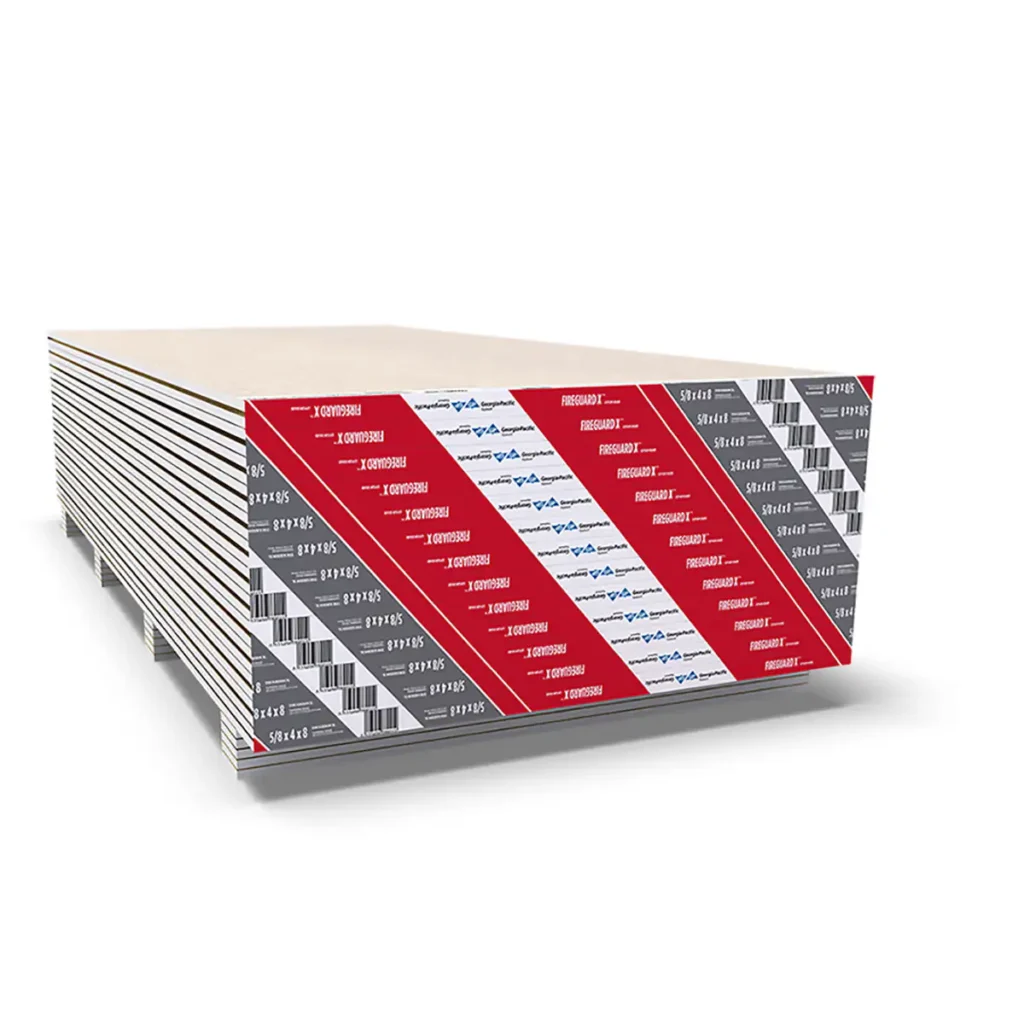
Fire-resistant drywall is designed to slow the spread of fire. It contains fiberglass strands and other additives to enhance its fire resistance.
- Type X: Offers basic fire resistance and is commonly used in residential settings, such as garages and utility rooms.
- Type C: Provides enhanced fire resistance and is often used in commercial buildings where higher fire ratings are required.
- Applications: Suitable for areas that require fire-rated assemblies, such as walls between garages and living spaces or commercial kitchens.
- Building Codes: Installation must comply with fire-rated assembly requirements to maintain the fire rating.
4. Soundproof Drywall
Soundproof drywall is designed to reduce noise transmission between rooms. It is typically made with multiple layers of gypsum and sound-dampening materials.
- Applications: Ideal for home theaters, music rooms, recording studios, and shared walls in multi-family housing.
- Installation: Often used in conjunction with sound-dampening materials like resilient channels or soundproofing compounds.
5. Mold-Resistant Drywall
Mold-resistant drywall is treated to resist mold growth, making it suitable for damp environments. It is similar to moisture-resistant drywall but offers additional protection against mold.
- Applications: Commonly used in basements, bathrooms, and other areas prone to dampness.
6. VOC-Absorbing Drywall
VOC-absorbing drywall is a specialized type designed to improve indoor air quality by absorbing volatile organic compounds (VOCs) from the air.
- Applications: Used in homes, healthcare facilities, and schools where air quality is a priority.
- Special Considerations: The drywall must not be painted or covered with materials that could block its VOC-absorbing properties.
7. Eco-Friendly Drywall
Eco-friendly drywall is made from recycled materials or designed to have a lower environmental impact. It is an excellent choice for sustainable construction projects.
- Applications: Suitable for both residential and commercial buildings where environmental considerations are important.
8. Impact-Resistant Drywall
Impact-resistant drywall is reinforced to withstand physical impacts, making it ideal for high-traffic areas or spaces where walls are likely to be bumped or hit.
- Applications: Commonly used in schools, hospitals, and other commercial buildings with high foot traffic.
9. Waterproof Drywall
Waterproof drywall is designed to provide additional protection against water damage. It is often used in areas that are frequently exposed to water.
- Applications: Suitable for showers, swimming pool areas, and industrial kitchens.
Choosing the Right Drywall
Selecting the appropriate type of drywall depends on the specific requirements of your project. Here are some factors to consider:
1. Moisture Levels
- For areas with high humidity, such as bathrooms and kitchens, moisture-resistant or waterproof drywall is recommended.
- Mold-resistant drywall is a better choice for spaces prone to dampness, such as basements.
2. Fire Safety
- Fire-resistant drywall is essential for areas that require enhanced fire protection, such as garages and utility rooms.
- Type C drywall is suitable for commercial applications where higher fire ratings are needed.
3. Sound Control
- Soundproof drywall is ideal for spaces where noise reduction is important, such as home theaters and recording studios.
4. Air Quality
- VOC-absorbing drywall is a good choice for improving indoor air quality in homes, schools, and healthcare facilities.
5. Durability
- Impact-resistant drywall is recommended for high-traffic areas or spaces where walls are likely to be bumped or hit.
6. Environmental Considerations
- Eco-friendly drywall is an excellent option for sustainable construction projects.
Cost and Market Availability
The cost of drywall varies based on type, thickness, and other factors such as location and purchase volume. Standard drywall is the most affordable, with prices ranging from $0.24 to $0.37 per square foot. Specialized types, such as fire-resistant or soundproof drywall, are more expensive but offer additional benefits.
The drywall market is robust and growing, indicating strong availability and a wide range of options for consumers.
Installation Requirements and Building Codes
Proper installation is critical to achieving the desired performance of drywall. Here are some key points to consider:
- Moisture-Resistant Drywall: Seal joints and edges carefully to prevent moisture penetration.
- Fire-Resistant Drywall: Follow the manufacturer’s guidelines to maintain the fire rating.
- Soundproof Drywall: Use additional sound-dampening materials for optimal noise reduction.
- Building Codes: Comply with local building codes, which may specify requirements for fire resistance, moisture resistance, and structural integrity.
Drywall is a versatile and essential material in construction, with various types designed to meet specific needs. By understanding the features and applications of each type, you can make informed decisions for your project. Whether you need moisture resistance, fire protection, soundproofing, or improved air quality, there is a drywall option to suit your requirements.