

When sanding drywall, the generation of fine dust poses significant health risks, making the use of safety gear indispensable. Without adequate respiratory protection, individuals can face serious respiratory issues, while unprotected eyes are vulnerable to irritation and injury. Additionally, skin exposure to this dust can lead to uncomfortable and potentially harmful conditions. Understanding the importance of selecting the right mask and goggles is essential for maintaining safety standards. However, the implications of neglecting these precautions extend beyond immediate discomfort—what long-term effects might they have on your health and well-being?
Respiratory Protection Essentials
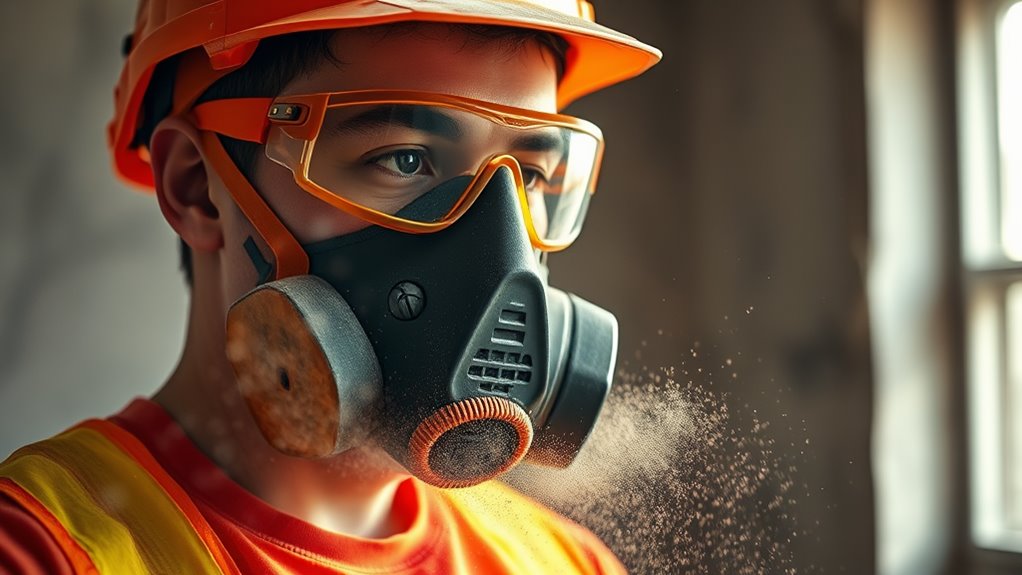
Proper respiratory protection is a significant aspect of safety when sanding drywall, as the process generates fine dust that poses considerable health risks.
Dust exposure during sanding can release harmful particles, including gypsum and silica, which may lead to respiratory issues such as throat irritation and long-term lung conditions.
To mitigate these risks, wearing N95 respirators is essential, as they filter at least 95% of airborne particles. Ensuring a proper fit is important; any gaps can allow harmful dust to enter, undermining the effectiveness of the mask.
Additionally, maintaining adequate ventilation in the workspace through open windows or fans can help reduce dust concentration, further protecting respiratory health.
Prioritizing respiratory protection is essential for maintaining a safe working environment.
Importance of Eye Safety
Why is eye safety essential during drywall sanding? The process generates fine dust that poses a significant risk to eye health. Without proper protection, airborne particles can lead to eye irritation, causing discomfort and potential vision problems.
Safety goggles are imperative as they create a barrier against these harmful particles. It is essential that goggles fit snugly to prevent dust from entering through gaps, and features like anti-fog lenses guarantee visibility remains clear during work.
Neglecting eye safety may result in temporary discomfort, but the risk of long-term damage, such as chronic irritation or vision impairment, is a serious concern. Consequently, investing in effective eye protection is non-negotiable for anyone involved in drywall sanding.
Protecting Your Skin
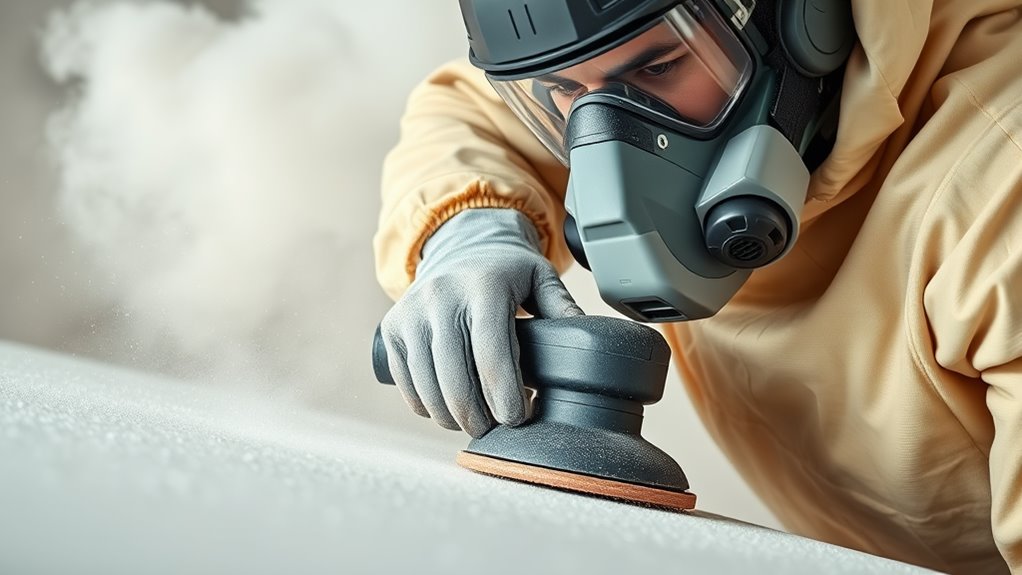
Skin protection is crucial during drywall sanding, as the fine dust generated can lead to irritation, dryness, or allergic reactions. Prolonged exposure to this dust can compromise skin health, making it essential to implement protective measures.
Wearing protective clothing, such as long sleeves and gloves, creates a barrier that minimizes direct contact with irritating particles. This not only reduces the risk of skin irritation but also enhances comfort and safety while handling tools.
Additionally, it is advisable to thoroughly wash any exposed skin after sanding to eliminate lingering dust. By prioritizing skin protection, individuals can guarantee a safer working environment and maintain overall skin health, preventing discomfort and potential allergic responses from drywall dust exposure.
Selecting the Right Mask
When it comes to sanding drywall, selecting the right mask is essential for guaranteeing adequate respiratory protection against harmful dust particles.
Various mask types are available, but N95 respirators are particularly effective, filtering at least 95% of airborne particles.
It is critical to prioritize fit importance; a poorly fitting mask can create gaps that allow harmful dust to enter, undermining its protective capabilities.
Features such as adjustable nose pieces and elastic straps can enhance comfort and secure a snug fit.
Masks with valves can also reduce heat and moisture buildup, improving breathability during extended use.
Ultimately, proper mask selection and fit are fundamental to safeguarding your respiratory health during drywall sanding tasks.
Choosing Suitable Goggles
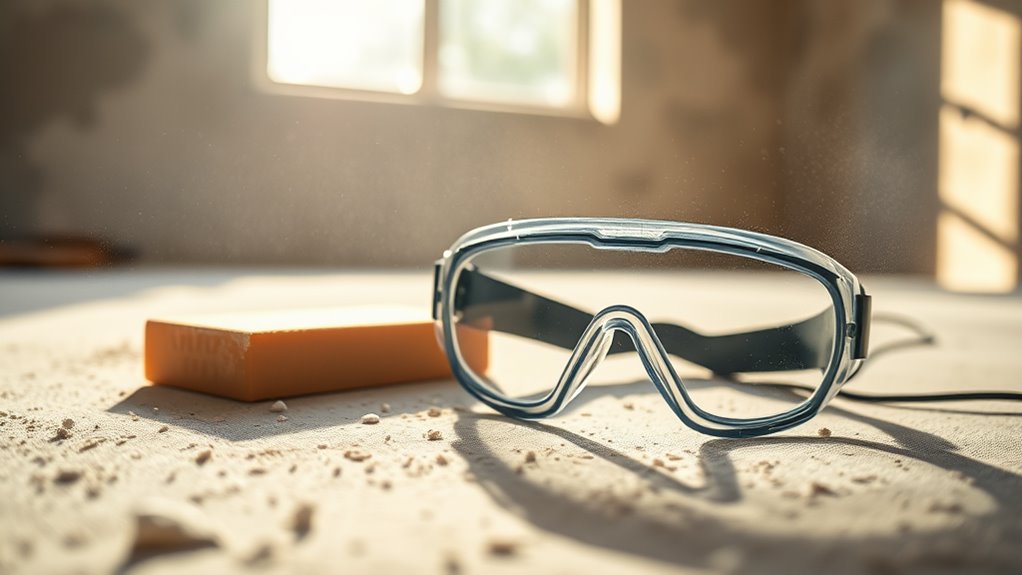
In addition to respiratory protection, safeguarding your eyes is crucial during drywall sanding to prevent irritation and potential damage caused by fine dust particles.
Selecting suitable goggles is fundamental for effective eye protection. Look for goggle features such as a snug, all-round fit to eliminate gaps where dust can enter. Wrap-around designs provide enhanced peripheral protection, which is essential in a sanding environment.
Comfort is also important; soft silicone frames can guarantee a secure fit without discomfort. Consider lens types as well; anti-fog lenses are particularly beneficial in dusty conditions, maintaining clear vision.
Investing in high-quality goggles can greatly reduce the risk of temporary and long-term eye damage during drywall sanding tasks.
Conclusion
In the domain of drywall sanding, the adage "an ounce of prevention is worth a pound of cure" holds true. The use of appropriate safety gear not only mitigates immediate health risks, such as respiratory issues and skin irritation, but also safeguards against long-term complications. Respiratory protection, eye safety, and skin coverage collectively create a protective barrier, ensuring a safer working environment. Prioritizing these measures is essential for maintaining health and well-being during drywall sanding activities.