

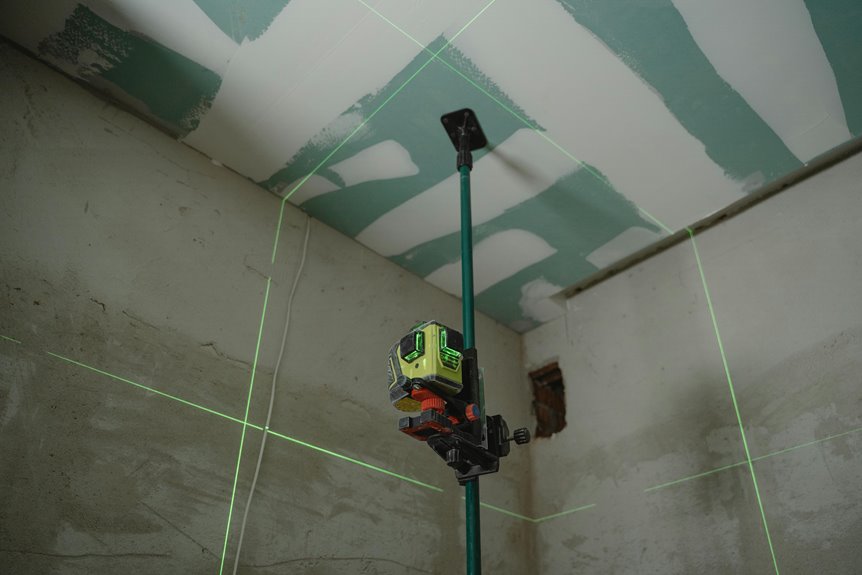
The first time I tackled a drywall project, it felt like assembling a giant jigsaw puzzle—each piece had to fit just right. With various types of drywall available, from moisture-resistant to soundproof, it's essential to choose the right one for your needs. But it's not just about materials; the tools and techniques can make or break the final look. As I navigated the challenges of installation, I discovered something more than just a construction method. What I found might change how you approach your next project.
Understanding Drywall Types
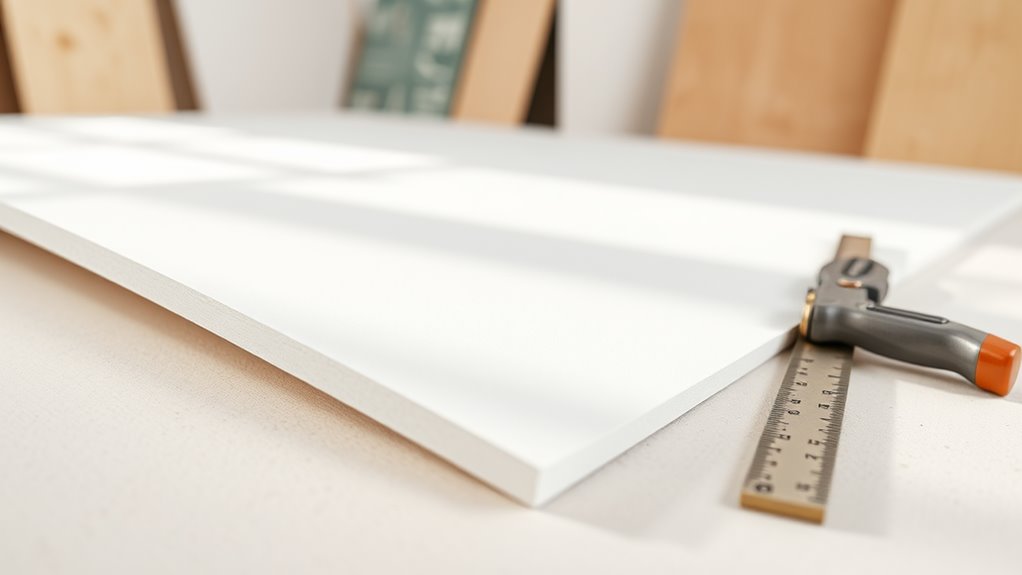
When it comes to drywall types, understanding the distinctions can make a considerable difference in your project's outcome.
Each type of drywall offers unique material benefits tailored to specific applications. For instance, regular gypsum board is versatile and cost-effective, ideal for most interiors.
Moisture-resistant drywall is perfect for areas like bathrooms, ensuring longevity against mold.
Fire-resistant drywall provides additional safety in kitchens and garages, helping to slow the spread of flames.
If you're working on a soundproof room, consider using soundproof drywall, which notably reduces noise transmission.
Knowing these drywall types can help you select the right product for your needs, ultimately enhancing both the quality and durability of your installation.
Choose wisely, and your project will thrive.
Essential Drywall Tools
Selecting the right drywall type is just the beginning; having the proper tools on hand is equally important for a successful installation.
I always make sure to have quality drywall adhesives ready, as they enhance bond strength and can cover approximately 500 square feet with just one tube.
When handling large sheets, I rely on drywall lifts, like the HangPro Drywall Lift TM, which simplifies the positioning and securing process, making it much easier to work alone.
For quick cuts, I stick with a traditional drywall saw, as it remains efficient despite newer options.
With these essential tools, I'm well-prepared to tackle any drywall project, ensuring a smooth and professional finish every time.
Installation Techniques

Effective installation techniques are key to achieving a high-quality drywall finish. I always prioritize precision when applying taping techniques, guaranteeing that seams are properly aligned and covered.
Using a quality joint compound is essential; I often opt for setting compounds in challenging conditions to speed up drying time. When it comes to finishing methods, I adhere to a systematic approach, starting with a first coat followed by sanding before applying additional layers. This creates a smooth surface that's ready for paint.
I can't stress enough the importance of attention to detail throughout the process; it's what separates a good installation from a great one. Mastering these techniques guarantees that my work stands the test of time, both in durability and appearance.
Common Challenges Faced
Despite mastering installation techniques, I often encounter several common challenges in drywall work that can complicate the process. Maneuvering these hurdles is essential for meeting customer expectations while ensuring jobsite safety.
Here are a few challenges I frequently face:
- Working alone can streamline tasks but complicates lifting heavy sheets.
- Unforeseen issues on the job site often require quick thinking and adaptability.
- Time management becomes critical; delays in one area can jeopardize the entire project.
Each challenge demands a proactive approach. I endeavor to maintain quality under pressure, knowing that delivering exceptional results directly impacts client satisfaction and future business opportunities.
Future Trends in Drywall
As I look ahead at the future of drywall, it's clear that the industry is evolving rapidly, driven by both technological advancements and changing consumer preferences.
I see a growing emphasis on sustainable practices, as builders and homeowners alike prioritize eco-friendly materials and methods. Manufacturers are responding by developing drywall products that use recycled content and reduce waste.
Digital tools are also transforming our approach, allowing for more precise measurements and better project management. Innovations like augmented reality can enhance design visualization, making it easier to plan layouts.
Additionally, increased online training resources will keep us updated on best practices. By embracing these trends, we can guarantee that the drywall industry remains efficient, sustainable, and aligned with modern needs.
Conclusion
In the grand scheme of home improvement, drywall might seem like the unsung hero, quietly holding up our walls while we chase after the latest design trends. Yet, beneath its unassuming surface lies a world of complexity, from moisture resistance to fire safety. So, while you're busy perfecting that Pinterest-worthy niche, remember: the next time you're wrestling with a sheet of drywall, know that even the most mundane materials have their moment of glory. Who knew walls could be so dramatic?