

Addressing minor drywall damage in a rental space can seem intimidating, yet it is both manageable and essential for maintaining the integrity of your living environment. Utilizing lightweight spackle for small holes, alongside self-adhesive patches for larger imperfections, allows for effective repairs without the need for extensive renovations. Mastering the right sanding techniques and having the appropriate tools on hand can greatly enhance the outcome of your repairs. However, understanding the nuances of preparation and technique can make all the difference in achieving a professional finish. What are the key elements to reflect upon before you start?
Lightweight Spackle for Small Holes
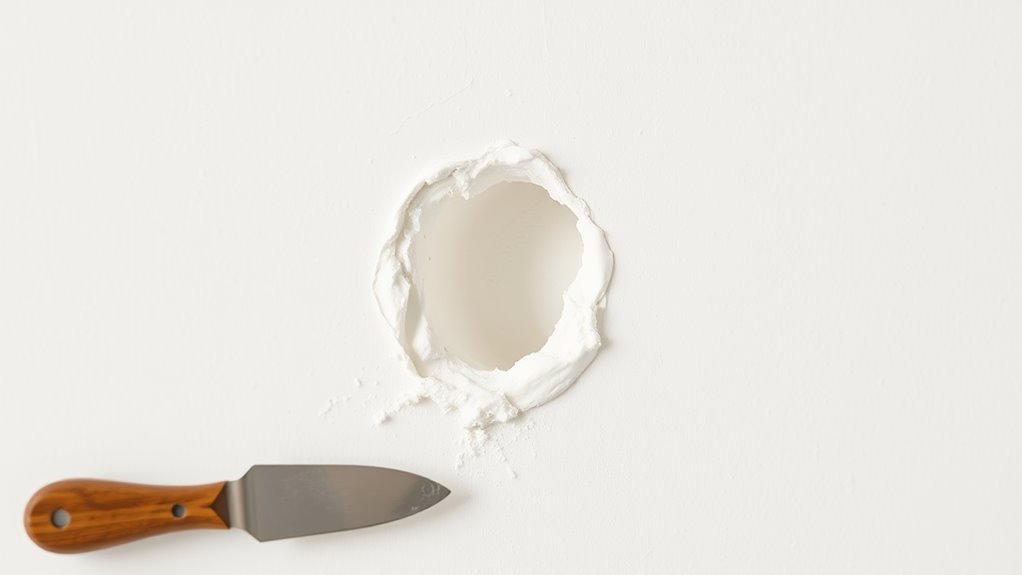
When faced with small holes in drywall, how can you achieve a seamless repair with minimal effort? The answer lies in using lightweight spackle, an ideal solution for repairing minor damage such as holes from nails or screws.
Begin the spackle application by using a putty knife to fill the hole generously, ensuring it slightly overfills to allow for sanding later. Use a crosshatch pattern for smoothing, which helps blend the repair seamlessly with the surrounding wall.
One of the advantages of lightweight spackle is its quick drying time, allowing you to proceed with minimal waiting. After the spackle has dried, only minimal sanding is required to achieve a smooth finish, making your repair both efficient and effective.
Self-Adhesive Patches for Larger Holes
For larger holes in drywall, such as those caused by door handles or accidental impacts, self-adhesive patches provide an effective and reliable solution.
These patches are designed with sturdy mesh material, guaranteeing they hold securely during patch installation. To begin, cut the patch slightly larger than the hole, then firmly press it over the damaged area after peeling off the backing.
Once in place, apply joint compound over the patch to create a professional finish.
- Guarantees a strong repair for wall damage.
- Requires minimal tools, making it accessible for renters.
- Facilitates a seamless look when painted over.
Sanding Techniques for a Smooth Finish
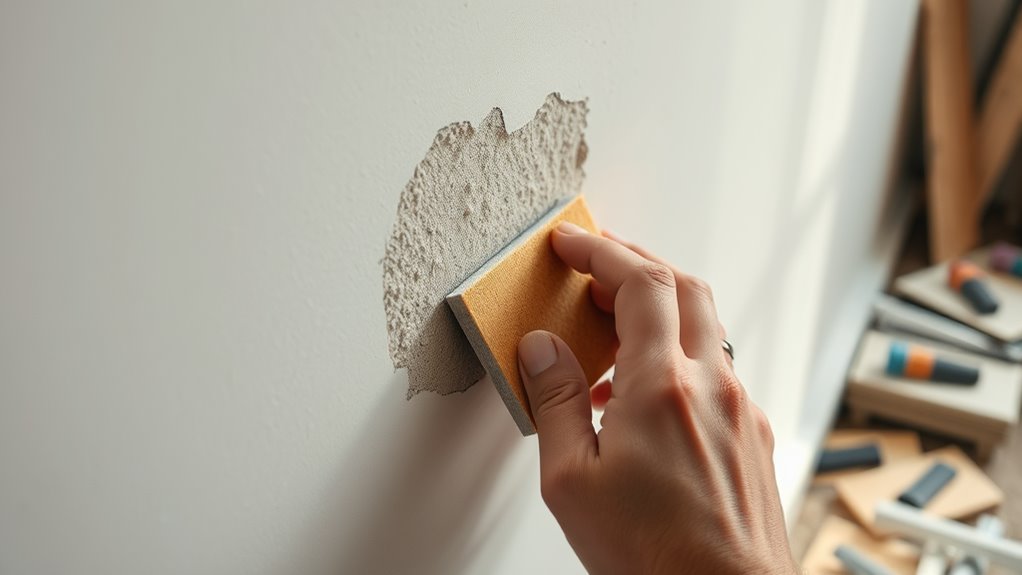
Achieving a smooth finish on drywall repairs hinges greatly on effective sanding techniques.
Begin with medium-grit sandpaper, typically in the range of 120-150 grit, to level the repaired area. Use circular motions and apply gentle pressure to prevent damage to surrounding drywall.
Once the surface is relatively even, switch to finer grit sandpaper, around 220 grit, to enhance smoothness. This step is essential for creating a seamless shift between the repair and the existing wall.
After sanding, be sure to wipe away any dust using a damp or tack cloth, ensuring a clean surface for painting.
Mastering these sanding techniques will notably improve the overall appearance of your drywall repairs, making them nearly invisible once completed.
Essential Tools for Repairs
Having the right tools on hand is vital for efficient and effective drywall repairs. For minor damage, a few key items will guarantee a smooth process and professional results.
A good quality, medium-width putty knife is important for applying spackle or joint compound seamlessly. Additionally, a sanding block or sandpaper will help achieve a smooth finish after repairs.
Finally, a small paintbrush or roller is necessary for touch-up painting, guaranteeing the repaired area blends flawlessly with the surrounding wall.
- Putty knife: For applying and smoothing spackle or joint compound.
- Sanding block: Vital for creating a smooth surface post-repair.
- Small paintbrush: Perfect for precise touch-up work after repairs.
With these tools, you can confidently tackle minor drywall repair tasks.
Importance of Preparation and Technique
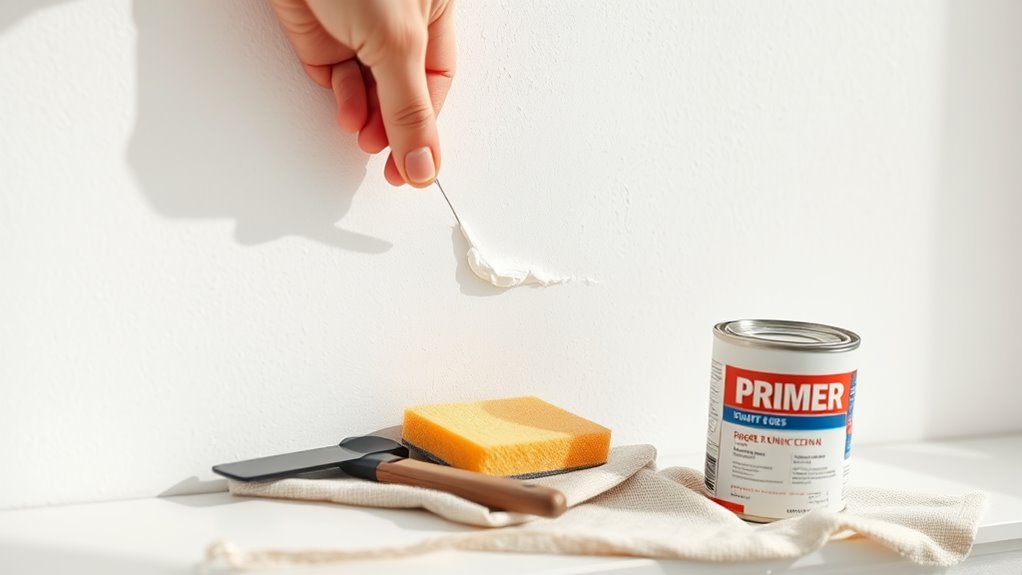
Effective drywall repair hinges on two critical factors: preparation and technique. Thorough preparation sets the foundation for successful repairs, ensuring that the damaged area is clean and ready for treatment.
Selecting the right materials, such as lightweight spackle for small holes or self-adhesive patches for larger ones, is essential for ideal results. Mastering proper repairing techniques, such as using a putty knife for application and sanding for a smooth finish, enhances the invisibility of the repair post-painting.
Additionally, careful attention to detail during the application process contributes to a professional-looking finish. By prioritizing preparation and employing effective techniques, renters can achieve aesthetically pleasing results while maintaining the integrity of their living space.
Conclusion
Effective drywall repair not only preserves the aesthetic appeal of a living space but also fosters a sense of responsibility and care for one's environment. By employing techniques such as lightweight spackle application and proper sanding, renters can address minor damages without incurring significant costs or inconveniences. This ability to maintain one's surroundings enhances the emotional connection to the home, reinforcing the notion that even small acts of upkeep contribute to a greater sense of belonging and pride in one's living space.